Lecture 11 of GSR Open Class
Assessment, evaluation and design
of green & sustainable remediation plan for
contaminated sites
Speaker:Prof. Piet Seuntjens, VITO Institute, Belgium
(February 24, 2022)
Prof. Piet Seuntjens, engineer in Chemistry and Agricultural Industries (Ghent University, 1991), Doctor in Sciences (University of Antwerp, 2000), Postdoctor fellow at ETH-Zurich (2001), visiting professor at University of Antwerp (since 2004) and Ghent University (since 2008). 25 years of experience in the management and execution of projects related to water and soil pollution. Innovation manager at VITO (2016-2020) of the unit Environmental modeling for products and services related to modeling of land use, climate and air quality, water and soil. Since 2021, program manager digital water services at VITO.
Course summary
This lecture provides a case study-based introduction of “green & sustainable” remediation plan for contaminated sites in Europe. The first case is groundwater remediation through in-situ bioprecipitation of heavy metals, the second case is Demonstration on a pilot scale of innovative injection techniques and reagentia with respect to the anaerobic bioremediation of sites polluted with CAH, the third case is sustainable technology appraisal including life cycle analysis, financial cost analysis. This lecture indicated that no tool is perfect and all are dependent on quality of data and experts’ perception, some technologies such as carbon foot printing and GIS will improve the green & sustainable remediation.
Course content
Innovative remediation technology was developed in academic context at beginning. With continuous research, investigation and experiment, it has finally become an acknowledged rule of technology: Sustainable & Green remediation. This IRT takes energy resources, waste production and social impacts into account while completing the repair goal. At present, green sustainability is the principle that must be considered in the remediation technology of polluted sites. This lecture shows how to repair according to the above principle in the actual site repair process through three cases.
1. Groundwater remediation through in situ bioprecipitation of heavy metals
(1) Introduction
The problem owner was a mental processing factory which a highly permeable zinc-contaminated aquifer at a metal-processing factory in Belgium. The maximum Zn concentration in the groundwater of the site had reached 260.000 μg/l. The estimated groundwater flow velocity is in the range 0.2–1 m/d. The groundwater is relatively oxidized, naturally low in DOC (< 1 mg/L) and relatively low in sulfate (40–50 mg/L).
The selection of restoration technology must consider the situation of the site itself, cost and whether it is green and sustainable. For pump & treat method, although the effect can be significant, it will extract a large amount of local groundwater, which is not suitable. Chemical enhancements & pump & treat method requires high cost and complex water treatment system, and is not suitable. After many discussions, the in-situ metal precipitation technology was finally selected and repaired by using the local sulfate reducing bacteria.
(2) In situ bio precipitation
The schematic diagram of ISBP principle designed in this case is as follows. The pollution source leaked metal ions into the site and generated pollution plume along with the groundwater. By injecting a carbon source that can be used as an electron donor into the pollution plume, the activity of SRB can be improved, so that sulfate can be reduced and combined with metal to form sulfide precipitation, which can be removed from the pollution plume. It is worth mentioning that Fe(Ⅲ) in the environment would also compete with sulfate for electrons to form Fe(Ⅱ). The reaction can be generally written as:


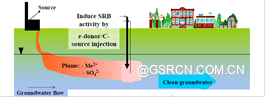
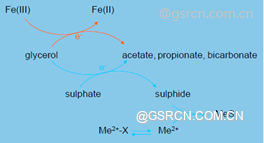
Figure 1 In situ bio precipitation
In order to investigate whether ISBP is applicable as a remedial option in this very permeable aquifer, both laboratory feasibility tests as well as a long-term field pilot test were designed in two sections of the plume.
(3) Laboratory Batch tests
The batch tests were made to test the feasibility of ISBP. (1) abiotic control, (2) added Na-lactate as an organic substrate; (3) added glycerol as organic substrate and (4) added Emulsified Oil Substrate (EOS) as organic substrate. The batches were incubated at ambient temperature and after 1.5 and 3 months, samples were taken from the water phase and analyzed for pH, redox potential, zinc and (only after 3 months) iron, sulfate and volatile fatty acids. It turned out that all substrates were effective - 99% of Zn was removed and sulfate was reduced. In addition, leaching tests were also prepared to test the stability of precipitates and the results showed that Zn with glycerol and EOS as organic substrate had precipitates stablly while there was an increase in As & Mn (& Fe) in solution.
(4) Field tests
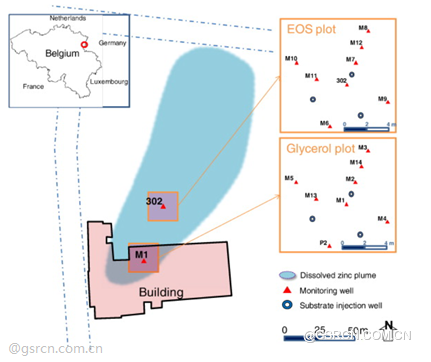
Figure 2 Schematic overview of test site, pilot locations, monitoring and substrate injection wells.
Fig. 2 shows an overview of the study site with both pilot zones, the locations of monitoring wells and substrate injection wells. During the tests, three injections were conducted in the site and the whole tests lasted for 232 days. The main monitoring parameters were Field parameters T°C, pH, EC, ORP , DO, heavy metal, iron, manganese, sulphate and nitrate. The effects of the substrate and sulfate injections were monitored by regular analysis of groundwater samples taken from the installed monitoring wells. However, the results showed that the content of Zn in groundwater decreased significantly with EOS and glycerol as organic substrates. What’s more, in order to avoid the draw back, maintenance injections must be taken.
(5) Modelling in situ bio precipitation
Through some parameters provided by the column experiment, many models can be used to simulate the migration and remediation of pollution plumes in the process of actual site remediation. For example, PHREEQC can be used to form field scale model (1D) and MODFLOW does well at forming 3D groundwater flow model. It is proved that through model simulation, the repair efficiency and the use of resources can be greatly improved.
2. Demonstration on a pilot scale of innovative injection techniques and reagentia with respect to the anaerobic bioremediation of sites polluted with CAH
(1) Introduction
A textile manufactory had a serious soil and groundwater pollution caused by CAH, which can due to its historical soil contamination caused by a local discharge point of chlorinated solvent at least 25 years ago. The local low permeability sandy clay leads to very high chloride content in soil (43700 mg/kg) and groundwater (426 mg/l TCE, small amounts 12 DCE and VC) and the DNAPL was between 7.2-7.6 m /bgs.
Pump and treat was implemented locally from 2003 to 2008, but this only made the concentration of CAH fluctuate to a certain extent, and there was no decreasing trend. Because the pollution was close to buildings and the polluted area was too deep, soil excavation cannot be carried out effectively. Therefore, the more suitable treatment method was in-situ chemical reduction. In this case, microscale ZVI (zero valent iron) injection into the site and anaerobic biological treatment were finally selected. In addition, soil mixing was also carried out to strengthen the treatment. The final concept was in the plume zone: CAH dissolved + Fe°→ chemical reduction, and in source zone: DNAPL + Fe0→ chemical reduction
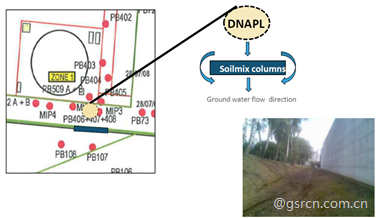
Figure 3 Installation of Fe bearing soil mix columns in DNAPL zone
(2) Laboratory feasibility test
The goal of the first part of the experiment was to screen reagents at different doses. Under strict anaerobic conditions, two doses of ZVI were added to TCE contaminated soil and groundwater, and lactic acid and a certain amount of TCE were added two months later. The results showed that the removal efficiency of TCE by ZVI was very high, which can remove more than 99% in 6 weeks, while the high dose of ZVI will advance this time.
In the actual pilot, there were some challenges in the injection of ZVI: 1) To keep the iron in suspension during injection; 2)To distribute the iron equally over the polluted zone. Therefore, a series of experiments were carried out to determine which effect was better when ZVI is mixed with cement or guar gum to injected into the soil. The results showed that cement would inactivate ZVI. Therefore, guar gum was finally chosen to mix with ZVI to maintain its suspension in the soil, and it was mentioned that guar gum is a biodegradable and friendly material.
(3) Field tests
14 soil mixing piles were set in the field, and their depth reached 8.4m bgl. A total of 3000 kg of fine-sized micro ZVI H4 (10 piles) and 500 kg of ZVI H20 (2 piles, more reactive) were injected into the soil. Guar gum would be biodegraded in time with release of simple sugars that stimulate anaerobic biodegradation.
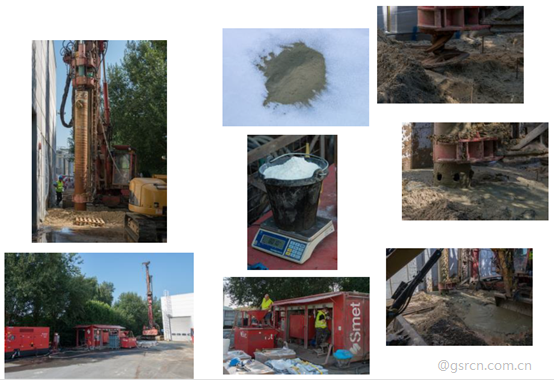
Figure 4 Field set up
Pollution removal was monitored through drilled soil sampling and groundwater well sampling in the field. The results showed that TCE in the“drilling mud was degraded to cDCE and ethene” and after 36 weeks, end-products free of Cl was keep on increasing. However, CAH concentration in groundwater were still very high.
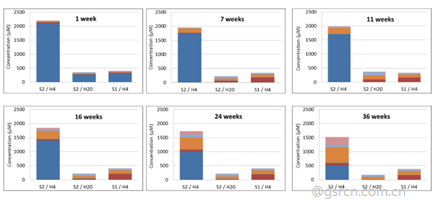
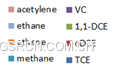
Figure 5 Evolution of cah with time in lab test
Above all, tests have shown that novel microscale ZVI can be effective to remediate chlorinated solvents in source zones. While “technical” effectiveness of Soil mixing of ZVI + guar gum for distributing µ-ZVI within the low permeability soil is indicated efforts to sample the soil mix piles are needed. However, there were still some problems that had not been solved, and technical repair and monitoring need to be continued for a longer time.
(4) Fe0 in permeable reactive barriers
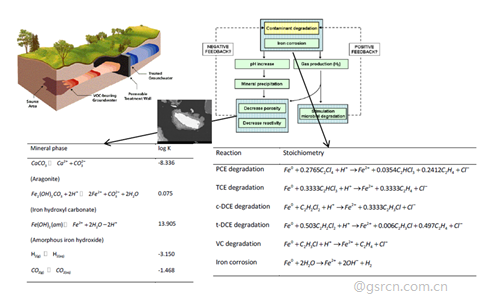
Figure 6 schematic of PRB and its mineral formation
The use of iron PRBs for groundwater remediation is a very active research field, which has grown tremendously during the last 15 years. The life time of PRB is a very important issue. Anaerobic iron corrosion increases the pH inside iron PRBs and promotes the precipitation of secondary minerals, which can greatly reduce the life time of PRB. Building a model to predict the service life of PRB under different field conditions can effectively improve the service effect of PRB
3. Sustainable technology appraisal
The brownfield existing in the city is the Ground for new industrial activities and innovation parks to develop. However, brownfield often has a very complex pollution situation, which will lead to high reconstruction cost, great reconstruction difficulty and uncertainty. Thus, for the redevelopment of the brownfield, it is important to Change perspective from treating a site as a cost towards treating a contaminated site as a valuable piece of land with potential for economic growth. In this sense,sustainability appraisal that takes into account not only environmental merit , but also cost-benefits and social benefits, is key.
Epilogue
From now on, although “Sustainability” is still a loosely defined concept, more and more projects will take green and sustainable into consideration. Many tools have been developed for site restoration, but no one is perfect and all are dependent on quality of data and experts’ perceptions. Some technologies such as carbon foot printing and GIS will improve the green & sustainable remediation.
课程总结:魏楠、宋志晓、董璟琦